People Don't Travel to Feel Cozy
They travel to have an experience. Here's how we built one.
THE CONTEXT
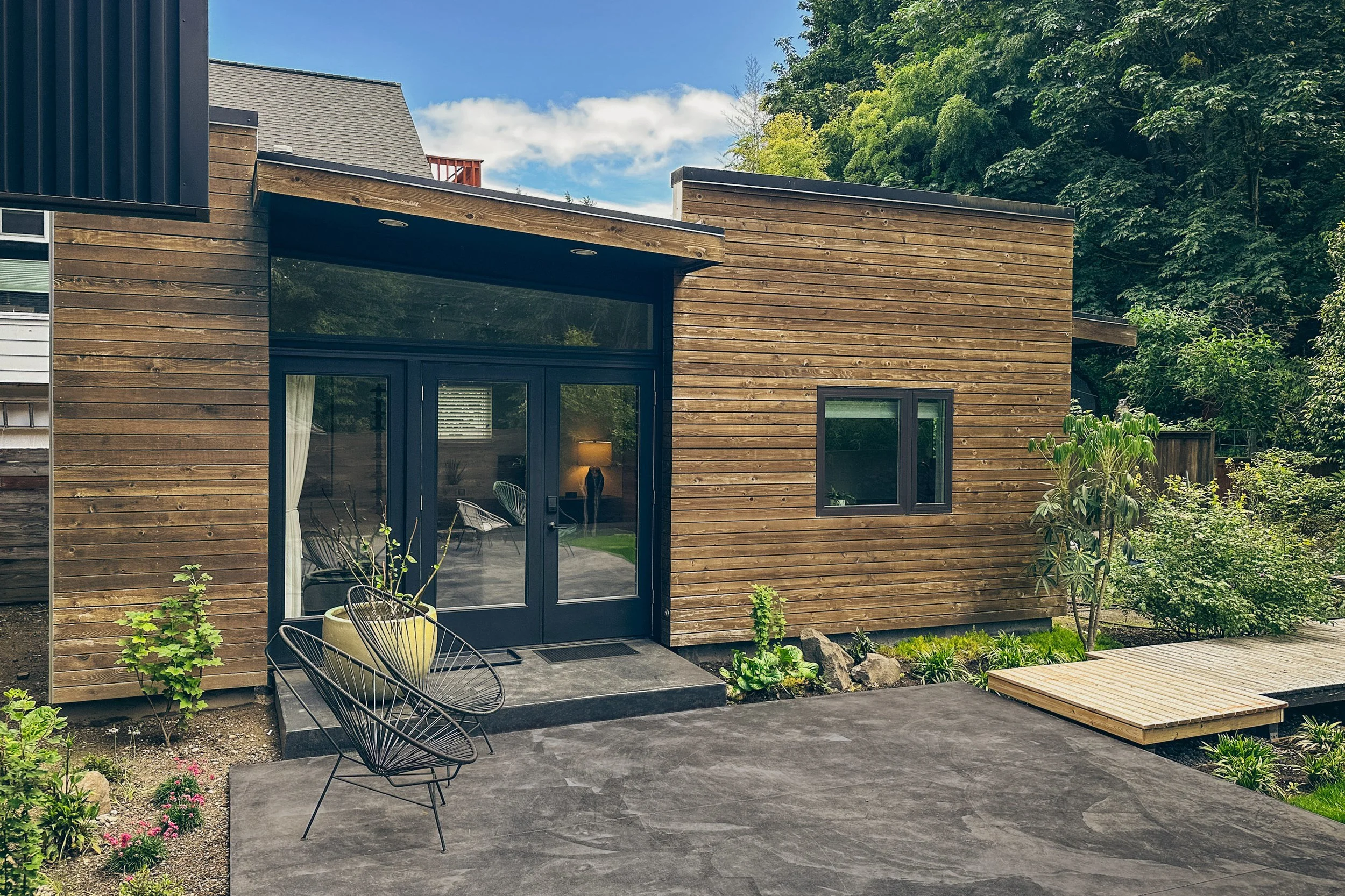
In 2023, my wife Nichelle and I converted our backyard studio, a 350 sq ft space in West Seattle's North Admiral neighborhood, into an Airbnb. Two years later: 176 reviews, a 4.98 out of 5 rating, perfect scores across cleanliness, accuracy, check-in, communication, and location, and recognition as a Top 1% listing at our peak. We didn't get there by accident.
WHAT MOST HOSTS GET WRONG
Most listings lead with the space: how many bedrooms, how many beds, whether it's cozy. The photography shows a made bed. The description covers the amenities. Then the host goes quiet until something goes wrong.
The fundamentals matter. A bad mattress will hurt you. But getting the fundamentals right is the floor, not the ceiling. People don't book a trip to sleep in a nice bed. They book a trip because they want to experience something, a city, a neighborhood, a feeling of being somewhere new. A host who understands this designs a fundamentally different stay than one who doesn't.
WHAT WE BUILT INSTEAD
A listing that sold the experience, not the room
The listing title doesn't describe the space. It describes what the space gives you access to: beach, old growth forest, top restaurants, and easy transit into the city. We wrote the description the way a trusted local friend would brief you before a trip, specific, honest, and designed to set accurate expectations rather than oversell.
We were upfront about things that could disappoint: the compact bathroom, the shared patio, the gravel path that's tricky with large luggage. Some people worry that kind of honesty chases customers away. It does. And that's exactly the point. The guests who self-select out were never going to be happy. The ones who book anyway arrive primed to appreciate everything you got right. It is far better to blow away a small community of people who are genuinely your people than to chase everyone and connect with no one. Honesty is a filter, and a filter is a feature.
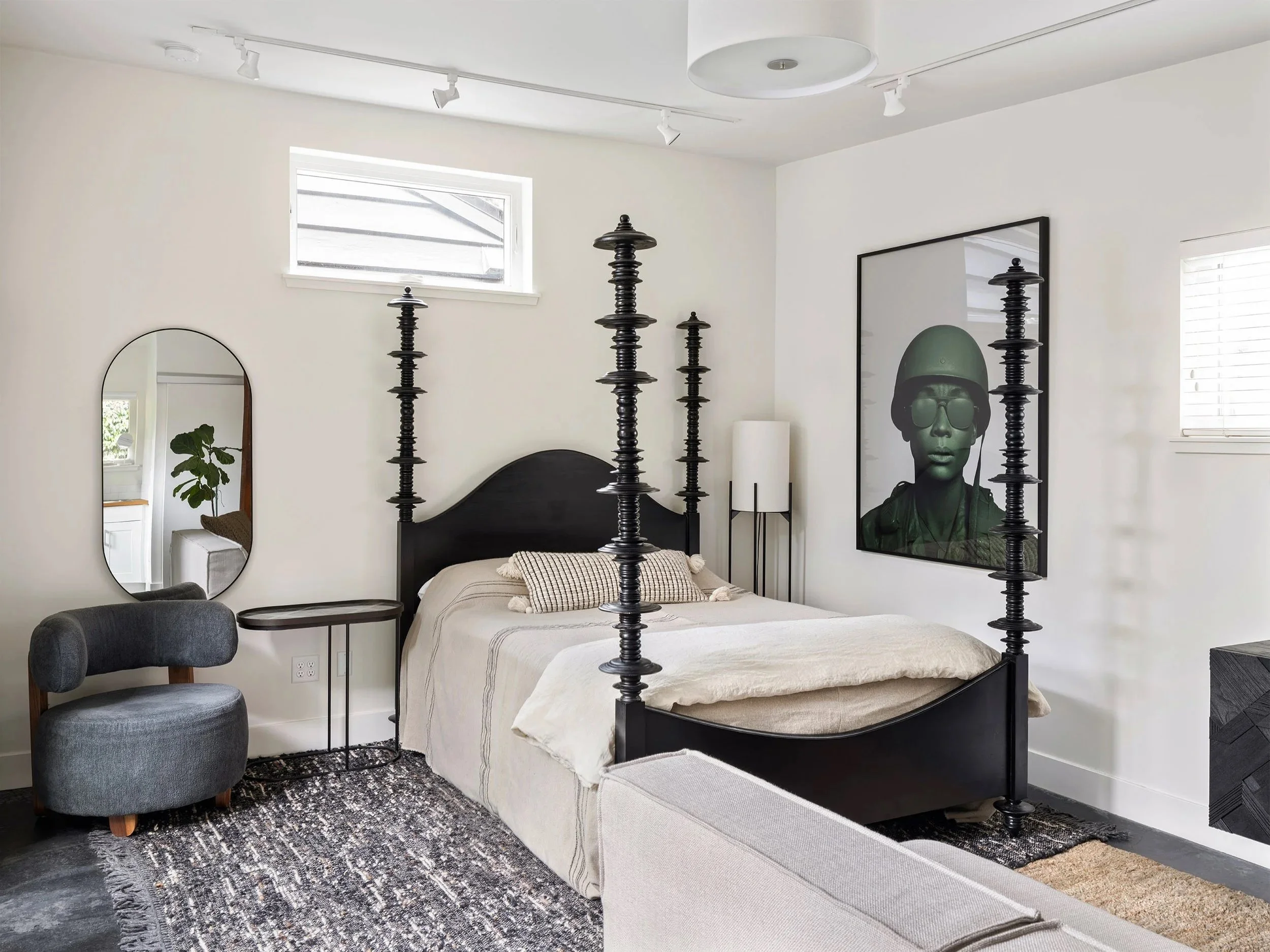
The cover image deserves its own mention. On Airbnb, your thumbnail is your headline. Most hosts photograph the safest version of their space. We led with the most visually distinctive thing in the room: a designer four poster bed and a large scale fine art print from my Uniform series. Conventional wisdom says never put original art in a rental. We saw that convention as the opportunity. Where others were stingy, we chose to be generous. That image stops the scroll. And stopping the scroll is the whole game.
Communication as a hospitality touchpoint
We designed the guest communication experience the same way we designed the physical space: anticipate what someone needs before they think to ask. Pre-arrival messages go out at the right moments. During the stay, we are accessible without being intrusive. After checkout, the follow-up is warm and specific, not templated. When problems came up, we treated them as opportunities. We didn't manage problems. We took care of people.
Removing every point of friction and doubt
We built a detailed guest guidebook covering restaurants, transportation, hiking, beach access, and things to do across every interest and budget. Inside the studio, we created clear shelf talkers and signs answering the questions every guest has and nobody wants to ask. The goal was for a guest to walk in, feel immediately at ease, and never have to guess.
LETTING CUSTOMERS WRITE THE PLAYBOOK
We made a serious commitment to collecting reviews from every single guest. Not just hoping they would leave one. Actually working for it. When 80% of guests independently mentioned the shelf talkers and signage, that wasn't a coincidence. That was a signal. We leaned into it and the reviews kept reflecting it back to us. Our guests were writing our ad copy. We just had to pay attention.
The counterbalance is knowing which feedback to act on and which to set aside. Not every comment deserves a response. Some feedback pulls you away from your strengths toward something generic. The skill is knowing the difference, staying grounded in who you are while remaining genuinely open to what your audience is telling you.
THE RESULTS
4.98 rating / 176 verified stays / Top 5% ranking (peak: Top 1%) / 98% five-star reviews
WHY THIS BELONGS IN A BRAND PORTFOLIO
This project has nothing to do with hospitality and everything to do with how I approach brand and customer experience problems. The same pattern shows up everywhere I work: find the gap between what people actually want and what they are currently being given, build something deliberate around that understanding, and let the evidence guide what comes next.
At MiiR, the gap was between a compelling mission and a brand that wasn't communicating it. At Keatley Inc., the gap was between what a client needed creatively and what a standard production would have delivered. Here, the gap was between what travelers actually want from a stay and what most hosts assume they want.
Whatever I'm building, I start with two questions: what does my customer actually need, and where is everyone else leaving space on the table?
View our Airbnb Listing